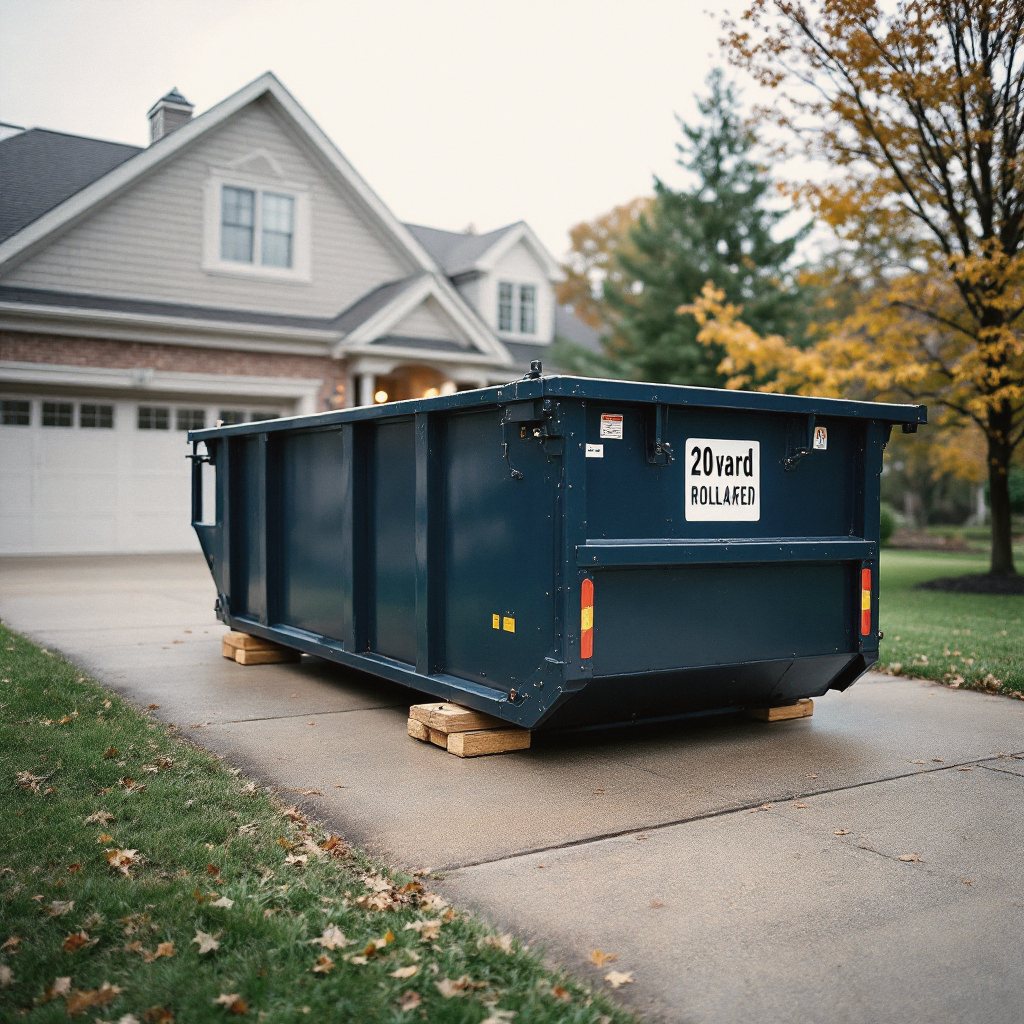
One flat number: delivery, pickup, window, real tonnage. Here's how the sizes map to actual Fishers projects — and what the market really charges.
Lock My Flat Quote| Size | Footprint | Holds about | Typical Fishers project | Typical range* |
|---|---|---|---|---|
| 15 yd | 14' × 8' × 4.5' | 4–5 pickup loads | Garage cleanout, two rooms of flooring, one bath | $300–$410 |
| 20 yd | 16' × 8' × 5.5' | 6–7 pickup loads | Kitchen or bath remodel, basement finish, ~30-square roof | $360–$480 |
| 30 yd | 18' × 8' × 6.5' | 9–10 pickup loads | Whole-home cleanout, addition, Geist-scale reno | $430–$590 |
| Heavy | low-profile | 10+ tons | Concrete, pavers, dirt, shingle-only | per material |
*All-in ranges typically quoted across Fishers, Geist, Noblesville and the east flank for a 7-day rental with included tonnage. Your written quote locks the exact figure before you book.
Walk the pile. Fits in four or five pickup beds? The 15. A kitchen, the carpet out of a whole house, or a standard roof? The 20 — this town's workhorse. Clearing a whole home, building on, or anything Geist-sized? The 30, and stop thinking about it. Genuinely stuck between two? Take the bigger one: the step up costs less than an overage or second haul, and an unfilled box charges nothing for its empty half.
Weight and honesty. A 20 of kitchen demo weighs a fraction of a 20 of tile and mortar, so real quotes ask what's going in and print the included tonnage. Broker teaser rates skip the question, then reconcile at the scale as an "overage" you never agreed to. Our flat number states the tonnage up front; genuinely heavy jobs see the scale ticket, not a mystery figure. When you're comparing us against anyone, make them answer one question: what tonnage is included, in writing?
Seven days standard — most projects finish in three or four, roof crews in two. Contractors phase-swap on schedule. Longer projects get extensions priced before delivery, never a per-day meter discovered on the invoice. Done early? One call and the driveway's yours again, usually next business day.
Fuel surcharges added after the drop. "Environmental fees" that appear at invoice. Per-day charges nobody mentioned. Trip fees for the pickup that was always part of the deal. None of these live in a Nickel Plate quote — the flat number is the whole number, which is the entire reason this company has customers.
The table gets you close; the pile in your head gets you exact. Here's how the jobs Fishers actually calls about map to the boxes above.
A two-car garage that hasn't been touched since the kids moved out is a 15-yard job almost every time. Bikes, shelving, boxes, the treadmill nobody ran on — four or five pickup loads of stuff that's bulky but light, which is exactly the load a 15 is shaped for. If the garage purge is the warm-up act for a bigger move or an estate, jump to the 20 so the momentum doesn't stall when the walls of the box arrive before the end of the pile. The full playbook lives on our cleanout dumpsters page.
Roofers think in squares (100 square feet of roof), and so should the box. A single layer up to roughly 30 squares rides comfortably in a properly weighted 20-yard. Two layers, or the sprawling rooflines around Geist, mean planning a swap or a second can before the crew shows up — not after the driveway fills at two in the afternoon. Shingles are the classic trap: they look small and weigh like sin. That's why the roofing dumpsters page exists, and why any roofing quote you compare should state its included tonnage in writing.
The 20-yard is this corridor's workhorse for a reason. Cabinets, countertops, subfloor, drywall and the tile that always turns out to be glued down harder than anyone remembers — a full kitchen fills a 20 with margin left for the surprises behind the walls. A single hall bath can live in a 15; a kitchen plus flooring through the main level stays a 20 and doesn't apologize for it.
Estates, pre-sale clear-outs, decades of accumulation: take the 30 and stop negotiating with yourself. Furniture and mattresses are volume hogs that hit the box's walls long before its weight limit, and a second haul on a 20 costs more than the step up to a 30 would have. Nine to ten pickup loads of capacity means the whole house leaves in one motion instead of three weekends.
Framing offcuts, siding, sheathing and a mountain of packaging are bulky-light — the 30-yard's natural diet. Builders on a schedule run swaps: one call, full box out, empty box down, crew never idles. Concrete washout, brick and dirt stay out of the general can entirely and ride in a low-profile box built for the weight; see heavy debris for how dense material gets priced per material instead of guessed at.
Every legitimate roll-off quote in the country is built from the same five parts. Knowing them is how you compare quotes instead of comparing teaser numbers.
The ranges in the table above already fold all five together. That's the entire point of a flat number — the thinking is done before the truck rolls, not at the scale afterward.
A loaded roll-off concentrates a lot of weight on two steel rails, which is why boards go under every residential drop we make — plywood or lumber under the rails and wheels spreads the load so stamped, sealed or freshly poured concrete stays exactly the way you left it. Tell us what your driveway is made of when you book and placement gets planned around it, not apologized for later.
The truck itself needs room to work: a straight shot of roughly 60 feet to back in and tilt the box down, a lane about as wide as a garage door, and clear air overhead — low branches, service drops and basketball hoops are the usual suspects. Most driveways along the corridor handle this without drama, but if yours is steep, curved or shared, mention it and we'll talk through the spot before delivery day instead of during it.
Permits are simpler than the internet makes them sound. Driveway placement normally needs no permit in Fishers — it's your property. A street or right-of-way placement is a conversation with the city first, and we'll tell you straight when you book whether your spot needs one. Deep corridor driveways mean it rarely comes up, but when it does, you'll know before anything is scheduled, not after.
Disposal facilities set the rules and every hauler lives by them. Keep these out of any roll-off, ours included:
Heavy materials — concrete, brick, block, dirt, shingles — aren't prohibited, they're just wrong for a general can. They go in a dedicated heavy-debris box sized for the density, priced per material. When something questionable turns up mid-project, one call to (317) 961-3111 sorts it before it becomes a problem at the scale.
